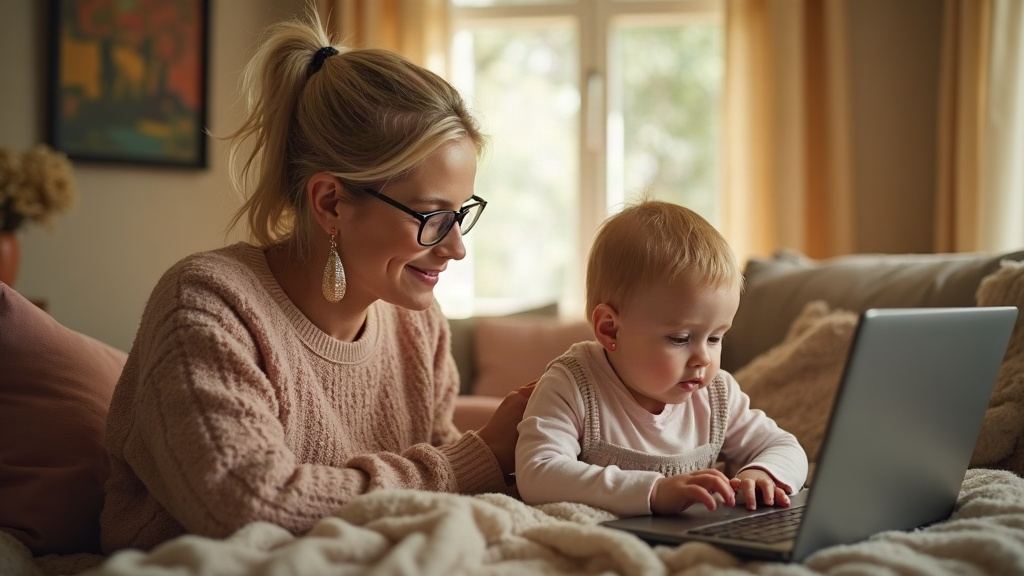
If you’re a parent in 2026, you’re drowning in parenting advice. Your mother-in-law texts you studies about why kids need boredom. A parenting influencer on TikTok swears by a specific sleep method. An AI app on your phone predicts your child’s behavior and recommends interventions. Your pediatrician offers yet another perspective. And somehow, everyone seems equally confident they’re right.
Welcome to the paradox of modern parenting: we have more information than ever, yet we feel more confused than ever.
The truth? You’re not broken for feeling overwhelmed. And the answer isn’t to find the “one true way” of parenting—it’s to develop a filter system that helps you evaluate advice critically, no matter where it comes from.
The Sources of Modern Parenting Advice (And Why They All Feel Authoritative)
Let’s start by naming the beast. Today’s parenting information comes from several overlapping sources:
Traditional sources: Doctors, books, parenting classes—things that require credentials and professional accountability.
Social media: TikTok, Instagram, YouTube, where anyone with followers can become an authority. Many creators are knowledgeable, but algorithmic reach doesn’t equal expertise.
AI-powered tools: Apps that track your child’s development, predict sleep patterns, or recommend behavioral strategies based on data and machine learning.
Personal networks: Family, friends, parents at school pickup—people you trust but who don’t necessarily have specialized knowledge.
Here’s the problem: all of these sources can contain useful information. And all of them can be wrong, incomplete, or poorly suited to your specific situation. The challenge is learning to distinguish between what’s evidence-based, what’s anecdotal, what’s profitable, and what’s genuinely useful for your family.
How to Spot Actually Useful Advice (Versus Clickbait and Overconfidence)
Good parenting information has certain markers. You don’t need to be a researcher to notice them.
Look for nuance. Red flag: someone who claims their method works for all kids. Real flag: someone who acknowledges that children are different, that circumstances vary, and that what worked for their family might not work for yours. Child development is genuinely complex. Anyone promising one-size-fits-all solutions is either trying to sell you something or hasn’t spent enough time with actual families.
Check for evidence, but understand its limits. A TikTok video might cite a real study—that’s great. But did they represent it accurately? Was it a study of 50 kids in one country, or 5,000 across diverse populations? Did they mention effect size (how much difference it actually made)? And critically: does one study prove something is universally true? Almost never. Good advice acknowledges what research shows and its limitations.
Notice who benefits financially. Is someone selling an app, a course, or a product tied to their advice? That doesn’t automatically mean they’re wrong—plenty of legitimate experts sell things. But it does mean you should be extra cautious. Follow the incentives.
Trust people who admit uncertainty. “Based on current research, many experts recommend…” is more trustworthy than “You must do this.” Good parenting information sits comfortably with the reality that parenting is messy and individual.
Why Grandma’s Advice Still Matters (Sometimes)
Here’s something we don’t talk about enough: older generations of parents have actual lived experience with raising humans. That’s data of a different kind—anecdotal, yes, but real.
Your grandmother’s insistence that kids need outdoor time? There’s now solid research backing that up. Her observation that “every baby is different”? Developmental science confirms it. She probably didn’t know the neuroscience, but she was observing real patterns.
The trick is separating her good observations from her confident mistakes. When Grandma says, “I let my kids cry it out and they turned out fine,” that’s anecdotal (she remembers the kids who survived it, forgets the nights everyone was miserable). When she says, “Kids need time outside daily,” that aligns with research on physical activity, vitamin D, and emotional regulation.
The value of older advice: it’s survived the test of time and multiple iterations. The danger: just because something “worked” 30 years ago doesn’t mean it’s optimal now, and it might not work for your kid.
The AI Factor: Useful Tool or Expensive Guesswork?
AI parenting apps are proliferating. Some use machine learning to track developmental milestones, predict sleep needs, or flag potential concerns. Others are basically digital journaling with a algorithm attached.
Are they useful? Sometimes. An app that helps you track patterns (“My kid naps better when we go outside by 10 a.m.”) can be genuinely insightful. An app that tells you your 2-year-old’s behavior is “normal for their age” might save you a worried evening.
But here’s the honest truth: AI parenting tools are trained on data, and data reflects the families who used them—typically more affluent, often from specific regions, frequently white and English-speaking. The recommendations work for that population. They might not work for you, and the app can’t see your actual kid or your actual circumstances.
Use AI tools as a reference, not an oracle. If an app says your child’s sleep pattern is unusual and your pediatrician says it’s fine, trust your pediatrician. AI can spot patterns humans miss—but it can also flag false alarms and normalize genuine concerns.
Your Decision-Making Framework
When you’re faced with conflicting advice, ask yourself:
- Is this advice aligned with current research? Not obsessed with it, but informed by it.
- Does it account for individual differences? Does it acknowledge that your kid might be different from the next kid?
- Does it match my family’s values? You don’t have to do what works for someone else.
- Can I actually sustain this? Parenting advice that requires you to ignore your own needs or personality won’t work long-term.
- What would my pediatrician say? For health and development questions, they’re your north star.
- What does my gut tell me? After you’ve gathered information, does it feel right for your family?
Parenting is not a puzzle with one right answer. It’s more like gardening—you need some basic knowledge (water, sunlight, soil), but a lot of success comes down to observation, adjustment, and patience with the fact that every plant is different.
Your job isn’t to find the perfect method. It’s to stay informed, stay flexible, and trust yourself enough to adapt advice to your actual life.
What sources of parenting advice do you find most confusing or contradictory? Drop a comment below—let’s sort through this together.

Bro Daddy
I am Bro Daddy!
Note
Disclaimer: The views expressed and the content shared in all published articles on this website are solely those of the respective authors, and they do not necessarily reflect the views of the author’s employer or the platform. We strive to ensure the accuracy and validity of the content published on our website. However, we cannot guarantee the absolute correctness or completeness of the information provided. It is the responsibility of the readers and users of this website to verify the accuracy and appropriateness of any information or opinions expressed within the articles. If you come across any content that you believe to be incorrect or invalid, please contact us immediately so that we can address the issue promptly.