5 Best Building Block Toys for Kids Brain Development
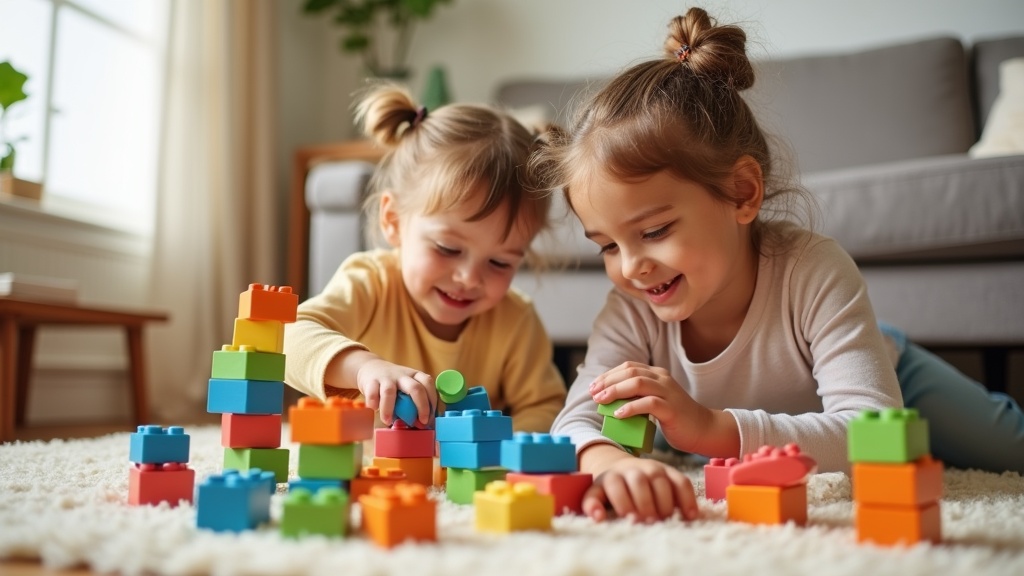
If you’ve ever watched a toddler stack blocks for hours, you know there’s something deeply satisfying about it. But here’s what you might not realise: those colourful blocks aren’t just keeping your child occupied—they’re literally rewiring their brain.
Building blocks are one of the most underrated developmental tools in parenting. They quietly work magic on spatial reasoning, fine motor skills, problem-solving abilities, and creativity. Research from the University of Delaware found that children who play with blocks have stronger spatial skills—and spatial skills at age 4 predict math achievement years later.
So if you’re thinking about investing in toys that actually matter, building blocks belong at the top of your list. Here are the five best options that’ll grow with your child and give you excellent bang for your buck.
1. Magna-Tiles (3D Magnetic Building Blocks)
Why it works: Magna-Tiles are magnetic 3D tiles that snap together to create structures. Unlike traditional flat blocks, these let kids build in three dimensions from day one.
Brain benefits:
- Spatial reasoning and 3D visualisation
- Understanding of geometry and physics
- Fine motor control (the magnetic snap requires pinpoint placement)
- Cause-and-effect learning
Best for: Ages 3+. Kids can start with simple stacking and progress to complex structures. The magnetic feature means fewer frustrations—blocks actually stay together instead of toppling over mid-build.
Practical tip: Start with a smaller set (around 8–12 tiles). Many parents buy huge sets upfront and find their child overwhelmed. Build gradually as their skills improve.
2. LEGO Classic Series (LEGO Bricks Set)
Why it works: LEGO is the gold standard. The iconic interlocking brick system has been developing children’s brains for 70+ years for a reason.
Brain benefits:
- Fine motor precision (snapping bricks requires control)
- Imagination and creative design
- Problem-solving (how do I make this stay up?)
- Ability to follow instructions (and later, deviation from them—which is actually brilliant for creativity)
Best for: Ages 4+. The Classic Creative Brick Box is perfect for starting without a specific theme. Let kids build whatever they dream up instead of following instructions.
Practical tip: LEGO bricks last forever. Invest in one good set and add to it over years. They’re also brilliant for sibling hand-downs and family storage. Pro move: store LEGO in clear containers so your child can see what they have.
3. Magna-Blocks (Large Magnetic Foam Blocks)
Why it works: These are soft, oversized magnetic blocks—perfect for younger toddlers or children with sensory sensitivities. They’re lightweight, colourful, and impossible to hurt with.
Brain benefits:
- Spatial awareness in a safe, forgiving format
- Sensory play (soft textures, satisfying snap)
- Gross motor skills (building requires reaching, bending, balancing)
- Cause-and-effect understanding
Best for: Ages 1–4. Smaller kids can’t accidentally hurt themselves with these, and the large size means less choking hazard. Great for floor play without supervision anxiety.
Practical tip: These blocks take up space. If you’re in a HDB flat (and let’s be honest, many of us are), start with a medium set and see how your child engages before buying more.
4. Wooden Building Blocks (Natural/Eco-Friendly Sets)
Why it works: Simple, classic, often Montessori-inspired. Wooden blocks have a timeless quality and a satisfying weight that plastic can’t match.
Brain benefits:
- Spatial reasoning without flashy features (forces genuine problem-solving)
- Balance and physics understanding
- Fine motor control (stacking requires precision)
- Minimalist design encourages open-ended creativity
- Sensory learning (weight, texture, sound when blocks tap together)
Best for: Ages 2+. These blocks grow with your child. A 2-year-old stacks them; a 5-year-old builds architectural designs. They’re beautiful enough to display, which means your living room won’t look like a toy explosion.
Practical tip: Wooden blocks are an investment, but they last decades. They’ll be passed to the next child, used as décor, or even become nostalgic keepsakes. Often worth the higher price tag.
5. Marble Run Block Sets (Building Blocks + Physics)
Why it works: These combine traditional blocks with a marble-run element. Kids build the structure, then watch marbles race through tracks they’ve created. Cause-and-effect becomes visual and immediate.
Brain benefits:
- Engineering thinking (how do I make this marble move the way I want?)
- Spatial reasoning in service of a goal
- Physics understanding (gravity, momentum, angles)
- Cause-and-effect with immediate feedback
- Patience and iterative problem-solving
Best for: Ages 4+. Kids who love a mix of building and experimentation. This is less “free creation” and more “engineering challenge,” which appeals to certain personality types.
Practical tip: Have marbles stored separately so you don’t lose them. These sets are also wonderful for older siblings to engage with younger ones—the older child builds, the younger one releases the marble.
How to Maximise Brain Development With Blocks
1. Don’t give instructions (at first)
Let your child build freely. Creativity flourishes in open-ended play. Instructions are helpful later, but first, just let them explore.
2. Resist the urge to “fix” their creations
It topples over? That’s the lesson. They’ll figure out balance and stability next time. Your role is encouragement, not intervention.
3. Ask open-ended questions
“What are you building?” “How did you figure that out?” “What happens if…?” Questions guide thinking without controlling it.
4. Rotate toys
If blocks are available all the time, their novelty fades. Rotate them in and out to keep engagement high.
5. Build alongside your child occasionally
Not to show them “the right way,” but to model creative thinking. Kids learn so much from watching parents problem-solve and take risks with play.
The Bottom Line
Building blocks are one of the best investments you can make in your child’s development. They’re screen-free, screen-safe, and they develop the exact skills kids need: spatial reasoning, creativity, persistence, and problem-solving.
Start with one type—whichever appeals to your child’s personality and your budget. Watch how their confidence grows, how their structures become more complex, and how they’ll happily play for 45 minutes straight (giving you actual peace and quiet).
What’s your child’s favourite type of block toy, and what do they love building most? Drop a comment below—I’d love to hear what creation you’re most proud of!

Bro Daddy
I am Bro Daddy!
Note
Disclaimer: The views expressed and the content shared in all published articles on this website are solely those of the respective authors, and they do not necessarily reflect the views of the author’s employer or the platform. We strive to ensure the accuracy and validity of the content published on our website. However, we cannot guarantee the absolute correctness or completeness of the information provided. It is the responsibility of the readers and users of this website to verify the accuracy and appropriateness of any information or opinions expressed within the articles. If you come across any content that you believe to be incorrect or invalid, please contact us immediately so that we can address the issue promptly.