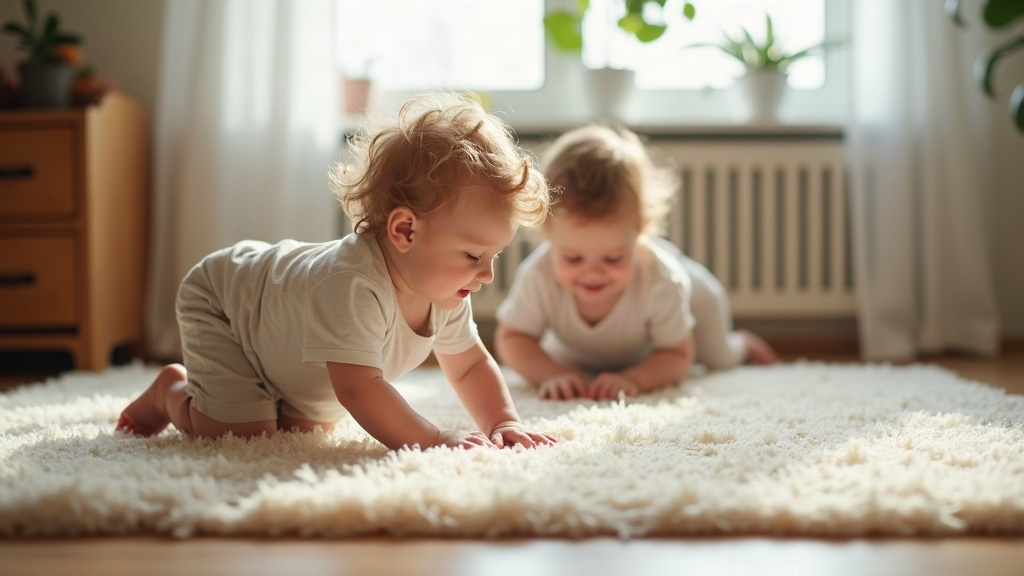
Watching your little one go from a stationary blob to a tiny person zooming around your living room is one of parenting’s greatest joys—and one of its most stressful. One minute your baby seems content sitting in one spot, and the next you’re wondering why they’re still not crawling like your friend’s kid.
If you’re spending nights googling “is my toddler developing normally,” this guide is for you. We’ll walk through the typical physical milestones from ages 8 months to 3 years, what to realistically expect, and when it’s genuinely worth checking in with your paediatrician.
Ages 8-10 Months: The Crawling Quest Begins
Around this age, most babies start showing real interest in movement. You might see “commando crawling”—that adorable belly-dragging shuffle—or a more traditional hands-and-knees crawl. Some babies skip crawling entirely and go straight to pulling themselves up on furniture.
Here’s the thing: not all babies crawl the same way, and that’s completely normal. Some shuffle on their bottoms, some army-crawl, some do a one-legged hop. The key milestone isn’t the how—it’s that they’re motivated to move independently.
At this stage, babies typically also start:
- Pulling up on furniture and standing briefly with support
- Banging objects together
- Pointing at things they find interesting
- Experimenting with more purposeful hand movements
What you can do: Create a safe, open space for exploration. Remove sharp corners, secure furniture to walls, and let them practice. Get down on the floor with them—your movement inspires theirs.
Ages 11-14 Months: Cruising and the First Steps
This is the “I can stand but absolutely cannot let go” phase. Cruising—shuffling along while holding onto furniture—typically emerges around 11-12 months. Your baby might spend weeks perfecting this before attempting unsupported steps.
First steps usually happen between 12-15 months, though the range is genuinely wide. Some kids walk at 10 months; others wait until 18 months. Unless there are other developmental concerns, the timeframe itself isn’t predictive of intelligence or future ability.
Expect to see:
- Standing independently for brief moments
- Taking tentative steps while holding your hand
- Squatting down and standing back up (incredible core strength building)
- Climbing stairs (with your hand for safety)
- Increased confidence and risk-taking (time to stay extra vigilant)
What you can do: Hold their hand for short walking practice, but also let them practice standing without support in safe spaces. Invest in soft-soled shoes or go barefoot at home—it improves balance. Stairs are fantastic for development; supervise closely and let them practice slowly.
Ages 15-18 Months: Walking, Falling, Repeat
Walking is new and thrilling but deeply unstable. Your toddler might spend weeks walking, then revert to crawling when tired or frightened. This is completely normal—they’re still refining the skill.
Around 16-18 months, you’ll notice:
- More confident, longer walking distances
- Ability to stop and change direction (though not always successfully)
- Starting to run, though it looks more like a controlled fall
- Climbing furniture (nightmare fuel for parents)
- Kicking a ball (though coordination is rough)
- Increasingly complex play using both hands
This is also when personalities really shine through in movement. Some toddlers are cautious climbers; others are fearless daredevils. Both are fine—just adjust your supervision accordingly.
What you can do: Create obstacles and simple “courses” using cushions, chairs, and low objects. Toddlers learn by navigating slightly challenging terrain. Stock your home with climbing-friendly furniture (sturdy ottomans, low balance beams). Enrol in a parent-toddler music or movement class if it fits your life—these are brilliant for gross motor development.
Ages 19-24 Months: Speed and Coordination Level Up
Your toddler is now a proper runner. They still look like a tiny drunk person—feet apart, arms up for balance, lurching rather than smoothly striding—but they’re mobile. This is when many parents suddenly understand why their own parents were exhausted.
You’ll see rapid improvements in:
- Jumping (feet may not leave the ground; that’s okay)
- Running with better balance and control
- Climbing stairs with alternating feet (when confident)
- Throwing and kicking with more intention
- Pedalling a tricycle (though many aren’t ready until closer to 3)
- Playing with increasing physical intention and imagination
This is also when injuries become more frequent because they’re confident but still clumsy. Small bumps and tumbles are part of learning—resist the urge to over-protect.
What you can do: Visit parks regularly. Sandpits, slide, swings, and open grass are brilliant for physical development. Join a sports-inspired toddler class (gymnastics, swimming, or movement). Limit screen time—toddlers learn movement through movement, not observation. Keep active yourself; movement is as much about modelling as it is about opportunity.
Ages 2-3 Years: Refinement and Real Play
By age 2, most toddlers are genuinely mobile. They run, jump, climb, and navigate complex movement patterns. Around age 3, you’ll see:
- Better balance and more fluid running
- Jumping with both feet off the ground
- Pedalling a tricycle with control
- Standing on one foot briefly
- Drawing simple shapes and scribbles
- Improved hand-eye coordination
- Starting to be interested in balls and more complex play
When to Actually Worry
Developmental milestones vary widely, and many “late” walkers are perfectly fine. That said, mention the following to your paediatrician:
- Not crawling or moving by 12 months (doesn’t have to be “crawling,” but should be mobile)
- Not standing with support by 15 months
- Not walking by 18 months
- Inability to put weight on legs
- Consistently tripping and falling after age 3
- Pain or limping
- Significant asymmetry (one side noticeably weaker or less coordinated)
- Loss of skills they previously had
In Singapore, the well-baby checks at your clinic include developmental screening. Use these appointments—they’re there for exactly this reason.
The Real Thing
Every child moves differently, learns at their own pace, and has their own physical personality. Your job isn’t to match them to a checklist; it’s to provide opportunity, safety, and encouragement. Some of the most coordinated adults started as late walkers. Some of the earliest runners became cautious kids who preferred quieter play.
Trust your instincts. If something feels genuinely off to you—not just “slower than another kid,” but off—trust that. Early intervention services exist in every region and are free or low-cost. Using them is never a waste.
What milestone surprised you most about your toddler’s physical development? Share your story in the comments—we’d love to hear it!
Bro Daddy
I am Bro Daddy!
Note
Disclaimer: The views expressed and the content shared in all published articles on this website are solely those of the respective authors, and they do not necessarily reflect the views of the author’s employer or the platform. We strive to ensure the accuracy and validity of the content published on our website. However, we cannot guarantee the absolute correctness or completeness of the information provided. It is the responsibility of the readers and users of this website to verify the accuracy and appropriateness of any information or opinions expressed within the articles. If you come across any content that you believe to be incorrect or invalid, please contact us immediately so that we can address the issue promptly.